Can You Use a Moka Pot on Induction? Check the Base
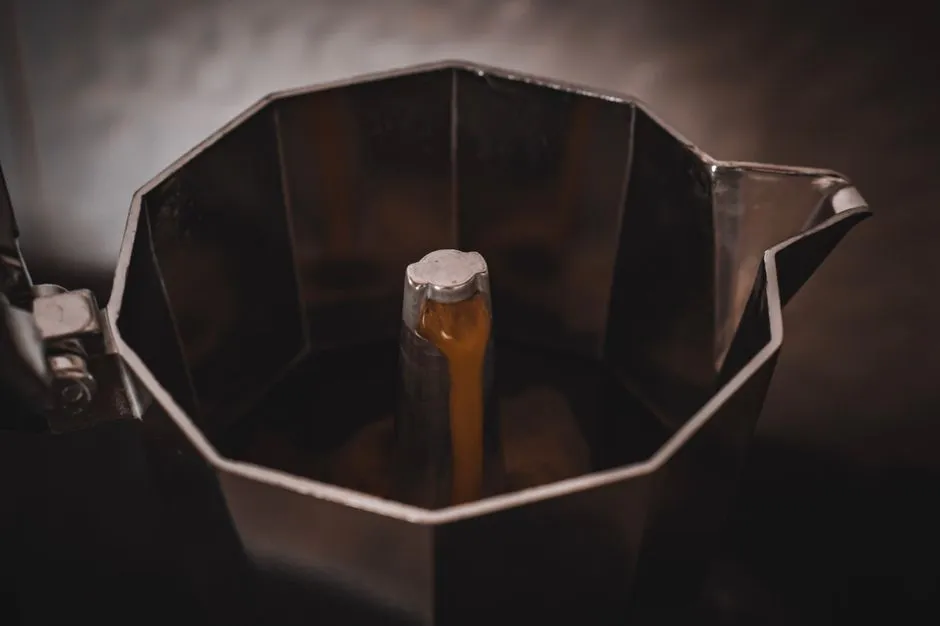
- Can you use a moka pot on an induction hob?
- Why does the base matter more than the upper chamber?
- Do all sizes of an induction-capable range work?
- Can a small pot be magnetic but still unsuitable?
- Is a magnet test enough?
- Can an adapter plate solve the problem?
- What information should you gather before buying?
- What safety rules remain after compatibility is confirmed?
- Sources
Can you use a moka pot on an induction hob?
Yes, if the exact moka pot and size are approved for induction and its base meets your hob's cookware requirements. An induction label or magnetic base alone does not establish every pairing. Check both manufacturers' instructions before use. Do not heat an empty pot, improvise an adapter or open a hot or pressurized brewer. Stop using damaged equipment and ask manufacturer support or a qualified technician about unresolved compatibility or faults.
The useful question is about the pot you own and the hob in front of you. A familiar shape, shiny metal or a product-family name leaves important details unanswered. You can resolve most shopping questions from documentation before putting anything on the heat.
This is a desk-researched compatibility guide. No pots or cooktops were tested for it, and the examples below are not a ranking of coffee quality.
Why does the base matter more than the upper chamber?
Induction needs suitable magnetic material in the cookware. Bosch's cookware guide distinguishes magnetic stainless steel from unsuitable materials and notes that an added magnetic bottom can change compatibility. The word “metal” is therefore too broad to answer the question.
An aluminum upper chamber does not automatically rule a brewer out. Bialetti's Moka Induction two-cup listing describes an aluminum upper chamber combined with a stainless-steel boiler designed for induction. Read the construction and approval of the complete product; do not transfer that statement to an ordinary aluminum pot.
Keep the brewer's identity with its instructions. If all you have is a photograph of an octagonal top, ask for the model and size before making a compatibility decision.
Do all sizes of an induction-capable range work?
No. Bialetti's Venus page describes induction suitability with an explicit exception for the two-cup version. That exception matters more than a retailer's broad heading for the range.
| Documented example | What its manufacturer says | What still needs checking |
|---|---|---|
| Bialetti Venus, two-cup | Excluded from the range's induction statement | Choose equipment expressly approved for the intended hob |
| Bialetti Moka Induction, two-cup | Listed as designed for induction | The hob's requirements for that exact base |
| Alessi 9090/1, one-cup | Magnetic bottom, with a separate hob-detection warning | The particular hob and cooking zone |
These are model-specific examples, not interchangeable serving sizes or promises about every hob. Do not assume a larger pot is simply a small pot you can partially fill: use the chosen brewer's own water and coffee instructions.
Can a small pot be magnetic but still unsuitable?
Yes. Bosch's induction manual, document 9000892873_D, printed page 9, explains that each element has a minimum pan-detection limit influenced by the cookware material. It also distinguishes a partly magnetic base from one that is fully magnetic. The visible width of the body is not a complete specification.
The Alessi 9090 product page, with the one-cup 9090/1 selected, warns buyers to verify that their hob switches on with an item of at least 90 mm diameter. That is 9 cm. It is a warning attached to this selected product, not a universal minimum for induction cooking.
Ask for the relevant base measurement and compare it with the hob manual's cookware criteria. If a listing provides only overall width, do not quietly substitute that measurement. When either manufacturer leaves the pairing uncertain, get a written answer identifying the exact products.
Is a magnet test enough?
Bosch presents attraction to a magnet at the bottom as a cookware check. For a moka pot, treat it as evidence about the base material, alongside the separate size and model restrictions above. It cannot cancel a manufacturer's exception.
If making that simple check, handle only a fully cool, unheated pot away from the hob. You do not need a heated trial to collect a model name, read a manual or ask a support question.
Can an adapter plate solve the problem?
Do not assume so. The Bosch manual cited above explicitly prohibits induction adapter plates. An accessory offered for a coffee maker cannot override a restriction in the cooktop's instructions.
Our recommendation is to resolve compatibility through an approved brewer-and-hob combination. If considering an accessory, obtain confirmation for the entire combination from the relevant manufacturers before use. Where a manual prohibits it, do not use it. Do not improvise a metal disc, place the pot in another pan or modify cookware to make it register.
What information should you gather before buying?
Make a short note with these fields:
- Brewer manufacturer, complete model and cup-size variant.
- The maker's induction statement and any exception beside it.
- Relevant base dimensions, identified as base measurements.
- Hob model and the intended zone's cookware requirements.
- Any accessory under consideration and both makers' instructions.
- The unanswered question, if the documents do not establish a match.
For example, an original support request could read: “I have the brewer and hob identified in the attached documents. Is this exact size suitable on the indicated zone without an adapter? Which base measurement should I compare with the zone requirement?” Avoid sending an unlabelled pot photograph and asking whether “this one” works.
What safety rules remain after compatibility is confirmed?
Compatibility does not replace operating instructions. The Bialetti Venus manual, English warnings, prohibits use without water, requires cooling before opening and directs users to stop after a malfunction and contact the dealer or manufacturer. For its induction-capable sizes, it specifies a medium setting rather than the highest heat.
Do not turn that wording into a universal hob number. Follow the current manual for your exact brewer and cooktop. Keep clear of hot surfaces and steam; never open a pressurized assembly. Electrical faults and internal repairs belong with qualified service personnel.
If the hob does not recognize the pot, stop and ask support about the documented pairing. Do not increase power or bypass detection.
Once the equipment is confirmed, our moka brewing guide addresses preparation and flavor. Keep these decisions separate: first establish a suitable setup, then use that setup according to its instructions. More related explanations sit in the moka-pot collection.